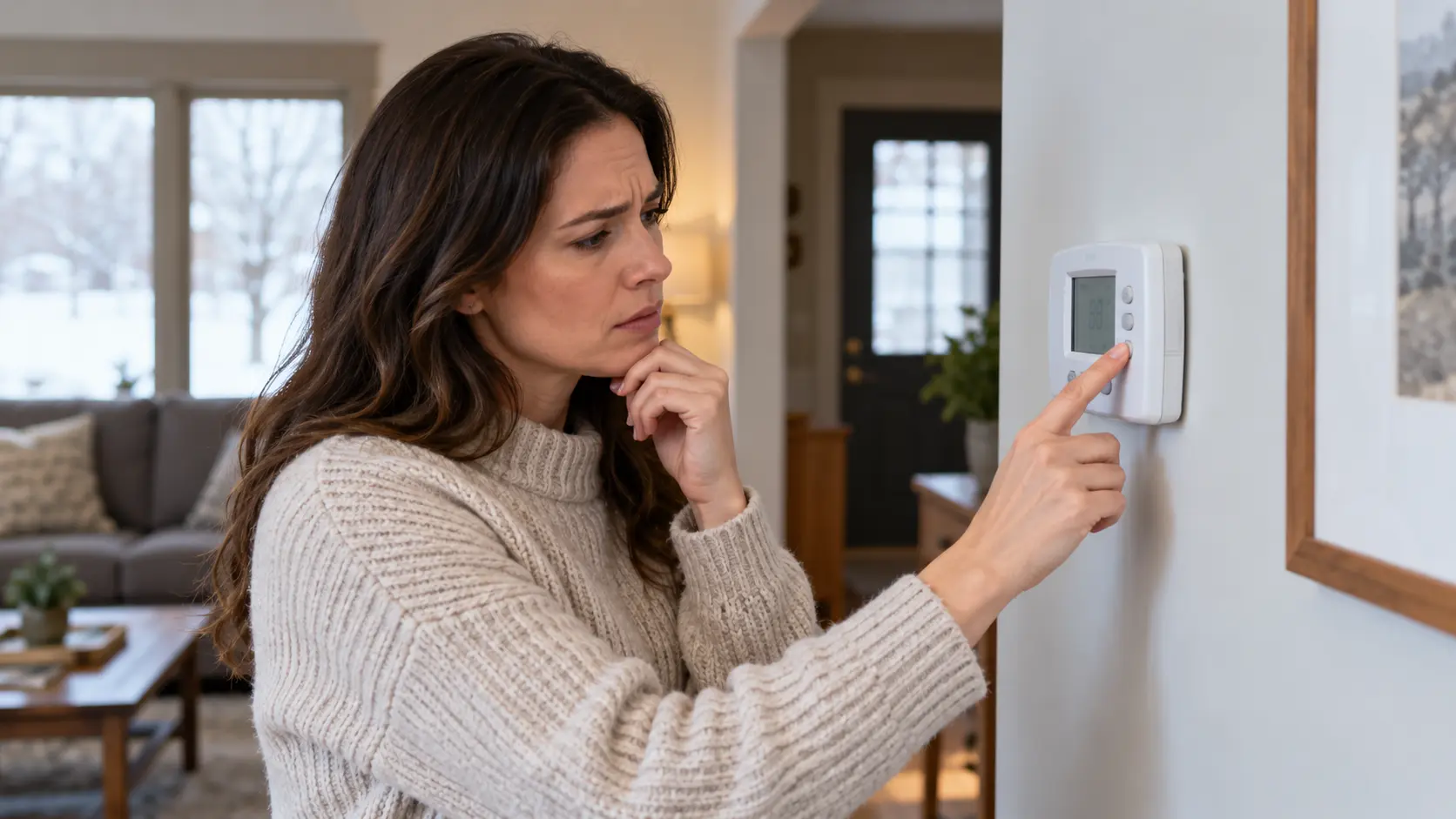
When you turn up the thermostat and nothing happens, it is easy to assume the furnace has failed completely. Sometimes that is the case, but a furnace that will not start can also be caused by something much simpler—a thermostat setting, loss of power, a dirty filter, or a safety control preventing the heating cycle from beginning.
Before assuming you need a major repair, there are a few basic things you can check without taking the furnace apart.
If the furnace still will not start after those checks, the next step is usually diagnosis rather than guessing which part needs to be replaced.
Start With the Thermostat
The thermostat is the simplest place to begin.
Make sure it is set to Heat, not Cool or Fan, and set the temperature above the current room temperature. If your thermostat uses replaceable batteries and the display is blank or behaving unusually, fresh batteries may solve the problem.
Then give the system a moment. Some heating systems do not start the instant the thermostat calls for heat.
If the thermostat appears to be working normally but the furnace does not respond at all, move on to the power supply.
Check the Furnace Breaker and Power Switch
A furnace needs electricity even if it burns natural gas for heat. The electrical system powers the controls, blower, ignition system, and safety devices.
Check your home’s electrical panel to see whether the furnace breaker has tripped. If it has, it can be reset once. If it trips again, leave it off and have the electrical or furnace problem diagnosed rather than repeatedly resetting it.
Many furnaces also have a nearby service switch that looks similar to a normal light switch. It can sometimes be turned off accidentally, particularly after work has been done near the furnace.
If the breaker and furnace switch are both on but the system remains completely unresponsive, the problem may be farther inside the control circuit.
Look at the Air Filter
A dirty filter does more than reduce airflow.
When airflow becomes restricted, heat can build up inside the furnace. Safety controls are designed to shut the heating cycle down when operating conditions become unsafe.
If the filter is visibly dirty and you know how to replace it according to the furnace manufacturer’s instructions, changing it is a reasonable homeowner check.
A clogged filter does not explain every no-start condition, however. If replacing a dirty filter does not restore normal operation, avoid repeatedly cycling the furnace on and off in an attempt to force it to run.
For ongoing filter, airflow, and preventive-system checks, see Pro Team’s furnace maintenance service.
Make Sure the Furnace Panel Is Properly Seated
Many furnaces have a safety switch that prevents operation when the access panel is not installed correctly.
If the furnace was recently serviced, a filter was changed, or the panel was removed for another reason, confirm that it is fully seated according to the manufacturer’s instructions.
Do not bypass the safety switch or open internal furnace components to make the system run. If the panel appears properly installed and the furnace still does nothing, another control or safety condition may be preventing startup.
The Ignition System May Not Be Starting the Heating Cycle
Modern gas furnaces typically use an electronic ignition system rather than a continuously burning pilot light.
When the thermostat calls for heat, several things must happen in the correct sequence before the burners stay on. An ignitor, flame sensor, control, or another part of that sequence can prevent the furnace from operating normally.
This is where the difference between checking and diagnosing becomes important.
You may notice that the furnace clicks, attempts to start, briefly lights and shuts down, or does nothing beyond the initial call for heat. Those details are useful, but identifying the failed component usually requires testing the furnace rather than replacing parts based on the symptom alone.
If the basic thermostat, power, and filter checks are normal, professional furnace repair in Temecula can identify where the heating sequence is stopping.
A Flame Sensor or Safety Control Can Shut the Furnace Down
Sometimes homeowners describe a furnace as “not turning on” when it actually starts for a few seconds and then shuts back down.
That is an important distinction.
A furnace that begins the ignition sequence but will not stay running may be reacting to a flame-sensing problem, airflow problem, overheating condition, or another safety control.
Safety switches exist for a reason. Bypassing one to keep the furnace running can turn a repair problem into a safety problem.
A technician can determine whether the control itself has failed or whether it is responding correctly to another condition elsewhere in the furnace.
Electrical or Control Problems Can Prevent Startup
The thermostat is only one part of the furnace’s control system.
Depending on the system, a no-start problem can involve wiring, relays, a transformer, the control board, blower-related components, safety switches, or another electrical fault.
These problems can create very similar symptoms from the homeowner’s point of view. That is why “the furnace won’t turn on” does not point to one specific part.
Testing helps narrow the failure down before a repair is recommended.
What About the Gas Supply?
A gas furnace also needs a dependable fuel supply to complete the heating cycle.
If other gas appliances are also not operating, there may be a broader gas-supply issue rather than a furnace component failure.
Do not dismantle gas connections or attempt internal gas-valve repairs yourself.
Stop troubleshooting if you smell gas or a carbon monoxide alarm sounds
If you smell gas, suspect a gas leak, or a carbon monoxide alarm activates, treat that as a safety situation rather than a normal furnace troubleshooting problem.
For a sounding carbon monoxide alarm, the U.S. Consumer Product Safety Commission advises occupants to move outside to fresh air, call emergency services or 911, and not re-enter until responders say it is safe. See the CPSC carbon monoxide safety guidance.
Do not continue trying to restart the furnace under those conditions.
Why a Furnace Can Fail Even When It Worked Recently
A furnace does not always give much warning before it stops starting normally.
Electrical components can fail, an ignitor can stop working, airflow can become restricted, a safety control can interrupt operation, or a thermostat problem can prevent the heat call from reaching the furnace correctly.
That does not automatically mean the furnace needs replacement.
The useful question is: What stopped the normal heating sequence?
Once that is known, you can make a more informed decision about repair.
What Should You Tell the Technician?
You do not need to diagnose the furnace before scheduling service.
What helps most is describing what you actually observe.
Tell the technician whether the thermostat is calling for heat, whether the furnace makes any sound, whether the blower starts, whether you see or hear an attempt to ignite, whether the system shuts down after starting, and whether you noticed any new noise, odor, or thermostat error message.
Those details can make the diagnostic process more efficient without requiring you to open or test internal components yourself.
Does a Furnace That Won’t Start Mean It Needs Replacement?
Not necessarily.
A no-start condition can come from a repairable thermostat, ignition, airflow, control, electrical, or safety-related issue.
Replacement becomes a separate conversation when the diagnosis is combined with factors such as the furnace’s overall condition, repair history, equipment age, safety concerns, comfort performance, or the cost of restoring reliable operation.
One failed component by itself does not tell you whether replacement is the better choice.
When Should You Call for Furnace Repair?
If the thermostat is correctly set, the furnace has power, the filter is not obviously restricting airflow, and the system still will not start, there is usually little benefit in continuing to guess.
At that point, the next useful step is finding where the heating sequence is stopping.
Pro Team Plumbing, Heating and Air provides furnace repair in Temecula for furnaces that will not start, will not produce heat, cycle incorrectly, or show other operating problems. If the furnace is currently working and your goal is preventive service rather than correcting an active failure, furnace maintenance is the more appropriate starting point.
Related Heating Resources
For an active no-heat or no-start problem, visit Furnace Repair in Temecula. If the furnace runs but the vents stay cool, read Why Is My Furnace Blowing Cold Air?. If your furnace is operating normally and you want preventive service, see Furnace Maintenance. For a broader overview, explore Heating Services in Temecula.